
Watching the Prime Ministers of India and New Zealand reminisce about his father, hockey legend Dhyan Chand, Ashok Kumar’s heart swelled with pride.
“Duniya mein faujein banti hai goliyan chalane ke liye. Lekin Indian army wahan gayi, aur goal se duniya ko chamatkar dikhaya,” he told The Indian Express. “I feel proud that a team of Armymen, and a humble soldier in that team, did something so remarkable that even after 100 years, the Prime Ministers are talking about it, and it still connects people from both nations.”

A century after that Indian Army contingent crossed the seas and left New Zealand spellbound with their artistry, those echoes found their way into the highest offices.
On Saturday in Auckland, Prime Minister Narendra Modi and his New Zealand counterpart, Christopher Luxon, paid tribute to the landmark 1926 tour that introduced New Zealand to the genius of Dhyan Chand. “A hundred years ago, our hockey team created history by coming here,” Modi said. “It inspires our sporting partnership even today.”
Hockey India secretary-general Bhola Nath Singh called the moment “a matter of immense pride”. Modi also announced that the centenary celebrations would continue through the year. India’s cricket team will tour New Zealand in November, while the men’s football team will play two friendlies—on November 12 in Auckland and November 15 in Christchurch.
The celebrations marked far more than the centenary of a hockey tour. They commemorated the beginning of India’s international hockey journey and New Zealand’s first glimpse of a young Army sepoy who would go on to become the sport’s greatest icon.
A century ago, hockey laid the foundation for a lasting friendship. 🇮🇳🤝🇳🇿
During his ongoing visit to New Zealand, Hon’ble Prime Minister Shri Narendra Modi highlighted how the historic 1926 Indian Army Hockey Team’s tour of New Zealand, which included the legendary Major Dhyan… pic.twitter.com/cs6uXdiJeE
— Hockey India (@TheHockeyIndia) July 11, 2026
The New Zealand Herald’s first impression of Dhyan Chand was this: “Four of the goals came from the stick of Dhyan Chand, a slightly-built youth, who played a remarkable game at centre-forward. His stick work and control of the ball were well-nigh perfect, and although he was a great individualist he always knew when to pass the ball.”
Reporting on an unofficial warm-up match against a New Zealand Navy side in Auckland on May 13, 1926, the newspaper – cited by the website stick2hockey.com – marvelled at a player whose artistry had left spectators spellbound.
Long before he became the ‘Wizard of Hockey’, Dhyan Chand was simply a soldier from the Indian Army introducing himself to a new country.
The tour itself had been almost two years in the making. Discussions between the New Zealand Hockey Association and the Army Sports Control Board began in late 1924, culminating in a formal invitation to the Indian Army in early 1925.
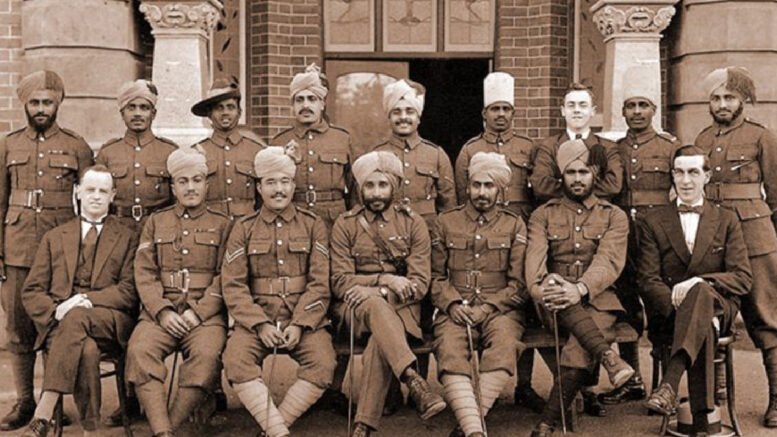
Following trials in Lahore, the first-ever Indian hockey team was selected. Captain David Tennant Cowan led the 17-member squad – four British officers, one Sikh officer and 12 Indian soldiers – which sailed from Calcutta on April 11, 1926, embarking on a month-long voyage across the Indian Ocean and the Tasman Sea, Ashok Kumar said.
Every stop became another exhibition. The team defeated sides in Sri Lanka and Australia before arriving in Auckland on May 11, where anticipation had reached fever pitch. The unofficial opener against the Navy side at Remuera only heightened the excitement. India won 11-1, with Dhyan Chand scoring four times, justifying the lavish praise that appeared in the next morning’s newspapers.
Six weeks later came an even bigger milestone. On June 26, 1926, India played its first official international at Lancaster Park in Christchurch before nearly 14,000 spectators, according to stick2hockey.com.
Wearing red shirts, white shorts and red socks, India defeated New Zealand 5-2. Dhyan Chand scored a hat-trick, including the first goal ever registered by an Indian team in international hockey. It marked the birth of India’s international hockey journey – and the arrival of the player who would soon become its greatest icon.
If the centenary celebrations in Auckland were proof that the tour still resonates, its influence extends far beyond diplomatic symbolism. Peter Miskimmin, the New Zealand government’s head of sports diplomacy, sees the centenary as a platform to deepen ties between the two countries. “Sport is a part of the free trade agreement,” he told *The Indian Express*. “There are interests from New Zealand and India to share, learn and collaborate on sport.”
For Miskimmin, the connection is also personal. His grandfather, Havilah Down, refereed India’s first official international in Christchurch.
“The message went around about these wizards from India who were so clever,” he recalled. “In the end, I think they had scheduled only two matches, and they added a third one. Mainly because there was a huge demand from the public.”
The fascination only grew. The second Test in Auckland attracted more than 18,000 spectators, while over 25,000 packed Eden Park for the third, which ended 1-1.
“There were not any grandstands, just the embankments,” Miskimmin said. “That tour had a huge impact on New Zealand. India returned several times through the 1950s and 1960s, and its style of short passing, pace and ball control profoundly influenced the team that eventually won Olympic gold in 1976.”
Decades later, when India returned to New Zealand in 2009, Dhyan Chand’s son, Ashok Kumar, was the team’s manager. At a stadium in Wellington, an elderly man approached him. As a boy, he had watched Dhyan Chand play during India’s 1935 tour.
“He was in his late 80s and learnt that Ashok bhai was the Dhyan Chand’s son,” recalled Romeo James, then India’s assistant coach. “He told Ashok bhai, ‘I’ll show you a hockey stick your father gifted me.’”
The next day, he returned with the stick, carefully preserved in a frame. “Ashok bhai asked if he could have it,” James said. “He smiled and replied, ‘Though you may be his son, I cannot give it to you. It was given to me by one of the greatest players in the world.’”
Ashok Kumar still gets emotional recounting the story. “It shows the affection people had for him.”
For a tour that began with a young Army sepoy introducing himself to the world, there could scarcely have been a greater tribute


Be the first to comment on "HIL: Century later, how Dhyan Chand and India’s maiden tour unites India, New Zealand"